

FREE SHIPPING FREE shipping from 99.00 PLN, SHIPPING IN 24h
EnglishEnglish
PolskiPolski
EnglishEnglish
LietuviųLietuvių
PLN/PLN
PLN / PLN
€ / EUR
$ / USD

Menu

Shop
Necklaces
GoldSummer collectionSilverChainsOtherStrings
9 Bracelets
GoldOtherSilver
Earrings
GoldSilverStud earringsLever BackHanging
Pendants
GoldSilver
Rings
GoldSilver
Sets
GoldOtherSilver
Brooches
Clips
SALE
OUTLET
ApearlHome PageShopBlogFAQ
Apearl
ApearlShopBlogFAQ
ShopNecklaces9 BraceletsEarringsPendantsRingsSetsBroochesClipsSALEOUTLET
ApearlBlogColors in the World of Pearls – How Do Natural and Cultured Pearl Shades Form?

Colors in the World of Pearls – How Do Natural and Cultured Pearl Shades Form?

26 May 2022
News
3 lubi
11532 wyświetlenia
0 komentarze
Colors in the World of Pearls – How Do Natural and Cultured Pearl Shades Form?

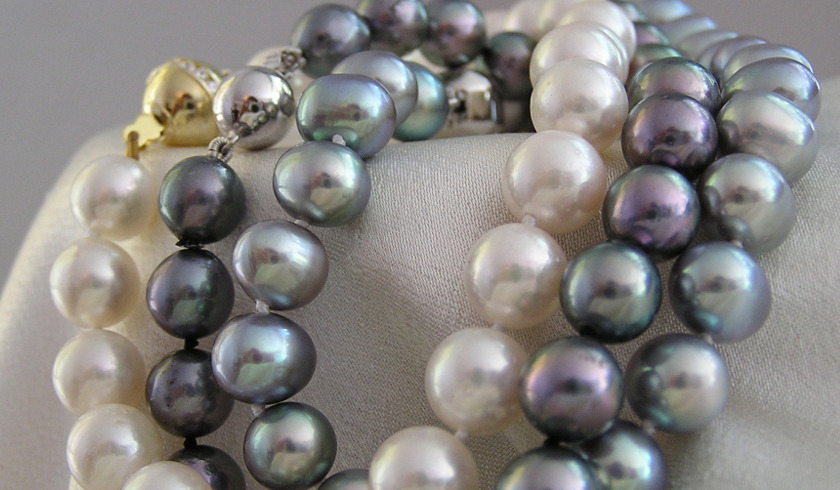
The natural world of pearls captivates with a rich palette extending far beyond classic white. In nature, pearls occur in soft blush pink, cream, brilliant gold, deep gray, mysterious black, and even subtle shades of green or violet. What determines this extraordinary spectrum, and why is every single pearl uniquely colored?

What Determines the Natural Color of a Pearl?

A pearl's color is never accidental; it is the refined outcome of complex biological, chemical, and environmental factors. The primary factor is the mollusk species in which the gem grows – specifically, the mantle tissue genetics and the ratio of calcium carbonate (aragonite) to conchiolin (organic binding protein).

Primary Oyster Species and Their Natural Color Palettes:

  • Pinctada fucata (Akoya Oysters): Native to Japan and China, renowned for producing white, cream, and delicate rose pearls with a mirror-like luster.
  • Pinctada maxima (South Sea Pearls): The largest marine oysters, found in Australia, the Philippines, and Indonesia. They yield prestigious pearls in golden, silvery-white, and warm cream tones.
  • Pinctada margaritifera (Tahitian Black Pearls): The famous black-lipped oysters of French Polynesia. They produce gems ranging from charcoal gray to deep black with overtones of green (the sought-after peacock shade), blue, or aubergine.
  • Hyriopsis cumingii (Freshwater Mussels): Cultivated in rivers and lakes, offering a vast array of natural pastel shades: pure white, salmon, pink, peach, lavender, and deep purple.

Water Environment and Trace Elements

Water conditions also subtly influence tone and color saturation. Water temperature, salinity, pH levels, plankton abundance, and trace minerals in the ecosystem play a part in nacre synthesis. Additionally, the depth at which the oysters are suspended influences light exposure, subtly shifting color intensity.

Gemological Optics: Bodycolor, Overton, and Orient

When assessing pearl color, gemologists look beyond a single hue. The complete visual impression is composed of three key layers:

  • Bodycolor: The dominant main color of the nacre (e.g., white, black, yellow).
  • Overton: A translucent secondary color lying over the bodycolor when light strikes the surface (e.g., a subtle rose glow on a white pearl).
  • Orient: An iridescent rainbow shimmer beneath the surface caused by the diffraction and interference of light passing through thousands of aragonite layers.

Do Snow-White Pearls Exist Naturally?

In their raw state, freshwater and marine pearls rarely exhibit a pure, snow-white tone; they naturally possess slight cream, gray, or yellowish undertones. To achieve the uniform white color favored in fine jewelry, pearls undergo a standardized, gentle whitening process (bleaching). In gemology, this is a fully accepted, industry-standard enhancement method that unifies color without altering the structural integrity or genuine origin of the pearl.

Find Your Favorite Shade at Apearl

At our online store, we celebrate the breathtaking diversity of natural pearls. We offer fine creations featuring carefully hand-picked pearls across stunning color spectrums. Discover how striking a classic pearl necklace in luminous white looks, or adorn yourself with captivating pearl earrings in soft pastels or deep metallic hues.

Explore the Apearl pearl jewelry store today to find the shade that perfectly enhances your skin tone and personal style.

Share this post

SUBSCRIBE TO NEWSLETTER AND GET 5% DISCOUNT
INFORMATIONCost of deliveryTerms and conditionsPayment methodsReturnsPrivacy Policy and cookiesOur guaranteelt-Frequently Asked QuestionsPayPo PaymentGPSR-gbHallmarks TableOur stores
My AccountContact usLoginMy Account
CUSTOMER SERVICECustomer Service Office
open hours:
Mon. - Fri.: 8:00 - 16:00
✆ +48 508-255-993✉ sklep@apearl.eu
De Tian Sp. z o.o.ul. Edmunda Bałuki 2470-407 Szczecin
AVAILABLE PAYMENT METHODS
Przelewy24Visa MastercardPayPoBLIKGoogle Pay
Apearl ® Brand 2026. All rights reserved.

This website uses its own cookies and third-party cookies to improve our services and show you advertisements related to your preferences by analyzing your browsing habits.

Information about how you use our website is shared with social, advertising and analytics partners. Partners may combine this information with other data received from you or obtained while using their services.

You can change your cookie settings at any time by changing your privacy settings in your browser or application. This change may result in lack of access to some features of the site.

You have the right to access data, delete it, limit processing, transfer, object, correct and withdraw consents at any time.

Detailed information regarding data processing and your rights, information about cookies or similar technologies, including information about the possibility of managing privacy settings, can be found in the Privacy Policy.

To consent to its use, press the Accept button.

More InformationCustomize cookies